Home / Articles
Can Cartilage Grafts Be Reused in Revision Surgery?
Home / Articles
Can Cartilage Grafts Be Reused in Revision Surgery?
If you’ve already gone through one or more rhinoplasty surgeries, you know that the road to your “final nose” is not always a straight line. Sometimes the first operation doesn’t deliver the look or breathing improvement you hoped for. Other times, your nose might change over time — with warping, implant problems, or cartilage weakening leading you back to the consultation room.
When patients come to Kowon Plastic Surgery for revision rhinoplasty, one of the most common questions we hear is:
“Can you just reuse the cartilage from my first surgery?”
It’s a logical question. If cartilage grafts were placed during your first procedure, wouldn’t it be easier to simply move them around, reshape them, or reposition them?
Let’s break this down from a surgical perspective, so you can understand what’s really happening inside the nose after a previous rhinoplasty.
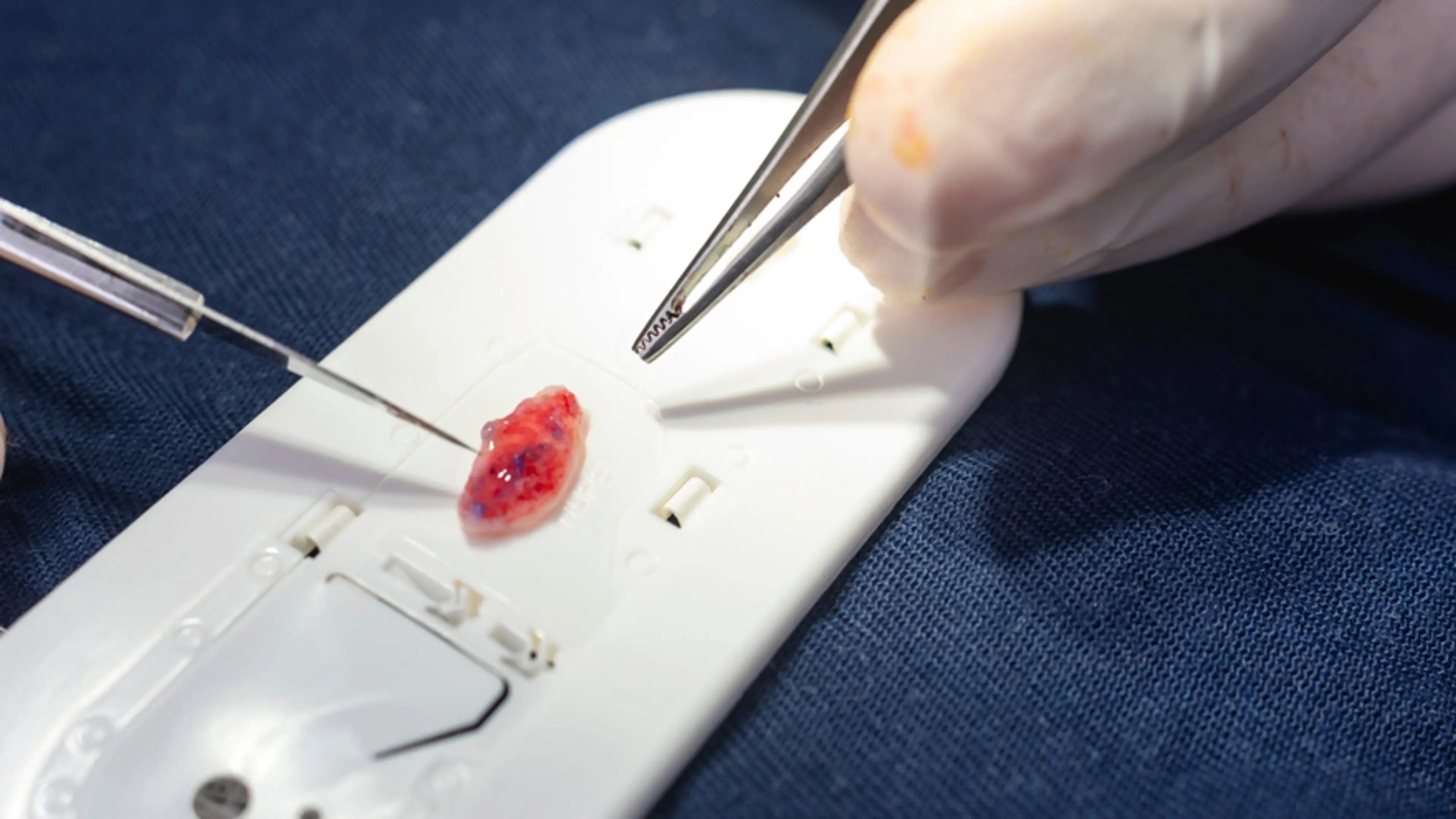
Cartilage is living tissue when it’s inside your body, but when it’s removed from its original location (such as your septum, ear, or rib) and reshaped for rhinoplasty, it undergoes changes.
In primary (first-time) rhinoplasty, cartilage grafts are placed to support, lengthen, or refine the nasal structure. They might be used as:
Once inside the nose, these grafts are held in place by sutures and surrounded by your soft tissue. Over time, several things can happen:
If your first surgery was many years ago, your graft may have changed shape, become brittle, or be so tightly bound to surrounding scar tissue that attempting to reuse it could cause more harm than good.
When we assess whether a graft can be reused in revision surgery, we generally see one of three scenarios.
If the previous surgery used good-quality cartilage, placed in a stable position, and the surrounding tissue is healthy, we may be able to carefully release and reshape it. This is most common when the first surgery was performed recently, or when revision is done within a year or two.
If the graft has warped, become irregular, or lost structural strength, it may no longer be reliable. Reusing a damaged graft risks recreating the same problem — or worse, creating asymmetry or instability.
In some cases, the graft has become so fused to surrounding scar tissue, or so thinned out, that removing it intact is nearly impossible. Trying to separate it can damage the skin and soft tissue, which is especially risky in noses that have already been operated on multiple times.
Even if a graft looks reusable at first glance, revision surgeons often prefer fresh cartilage for a few key reasons:
Fresh cartilage is more predictable in shape, strength, and flexibility. Once a graft has been carved, placed, and under tension for years, it’s less stable.
Every revision nose has some degree of scar tissue. Old grafts are often surrounded by dense adhesions, making them difficult to extract without damaging the nasal framework.
If the old graft was placed incorrectly or caused issues (warping, drooping, breathing obstruction), keeping it risks repeating the same outcome.
Why rib cartilage?
Allows us to rebuild the nose without relying on synthetic implants
As Dr. Kim Hyung Taek, our lead surgeon, often says:
“The nose is not a recycling project. Revision rhinoplasty is not about reusing whatever is there at any cost — it’s about building the most stable, natural, and safe result for the patient’s lifetime.”
If that means salvaging a healthy graft, we will. But if that means starting fresh to give you the strongest foundation, that’s the safer path.
Think of it like renovating a building. If the original beams are straight and strong, you might keep them. But if they’re warped or rotten, it’s better to replace them entirely — otherwise the structure remains unstable.
For many patients, the idea of needing new cartilage feels overwhelming. They’ve already gone through the physical and emotional investment of surgery — sometimes multiple times. The thought of another harvest site (like the rib) can be daunting.
We’ve seen too many cases where a shortcut in revision surgery led to yet another failure. And each additional surgery increases the challenge, risk, and recovery time.
A 34-year-old patient came to us after two previous rhinoplasties abroad. She had severe tip drooping, crooked nasal bridge, and difficulty breathing. Her previous surgeries had used rib cartilage grafts, but they had warped significantly over five years.
On examination, we found the old rib grafts were deeply embedded in scar tissue and twisted beyond salvage. Attempting to reuse them would not restore straightness or stability.
Instead, we harvested fresh rib cartilage, meticulously carved it to resist warping, and rebuilt the septal support. We also reconstructed the airway with spreader grafts to improve breathing.
At one-year follow-up, her nose remained straight, natural in appearance, and her breathing was fully restored. She told us:
“I was disappointed at first when Dr. Kim said my old grafts couldn’t be reused. But now I’m grateful we started fresh — I finally have a nose that looks and works the way it should.”
If you’re considering revision rhinoplasty and wondering about reusing your existing grafts, here are key questions to bring up:
Because we perform a limited number of surgeries per day, each revision case receives the time and precision it deserves — whether that means carefully salvaging a graft or meticulously carving a new one.
Yes — cartilage grafts can sometimes be reused in revision rhinoplasty, but it’s not always the safest or most effective choice. The decision depends on the graft’s condition, the quality of surrounding tissue, and your long-term structural needs.
If you’re facing revision surgery, remember: this is your chance to rebuild your nose on the strongest possible foundation. Choosing a clinic and surgeon experienced in both salvage and reconstruction — like Kowon Plastic Surgery in Seoul — can make the difference between another round of disappointment and a result that lasts for years.