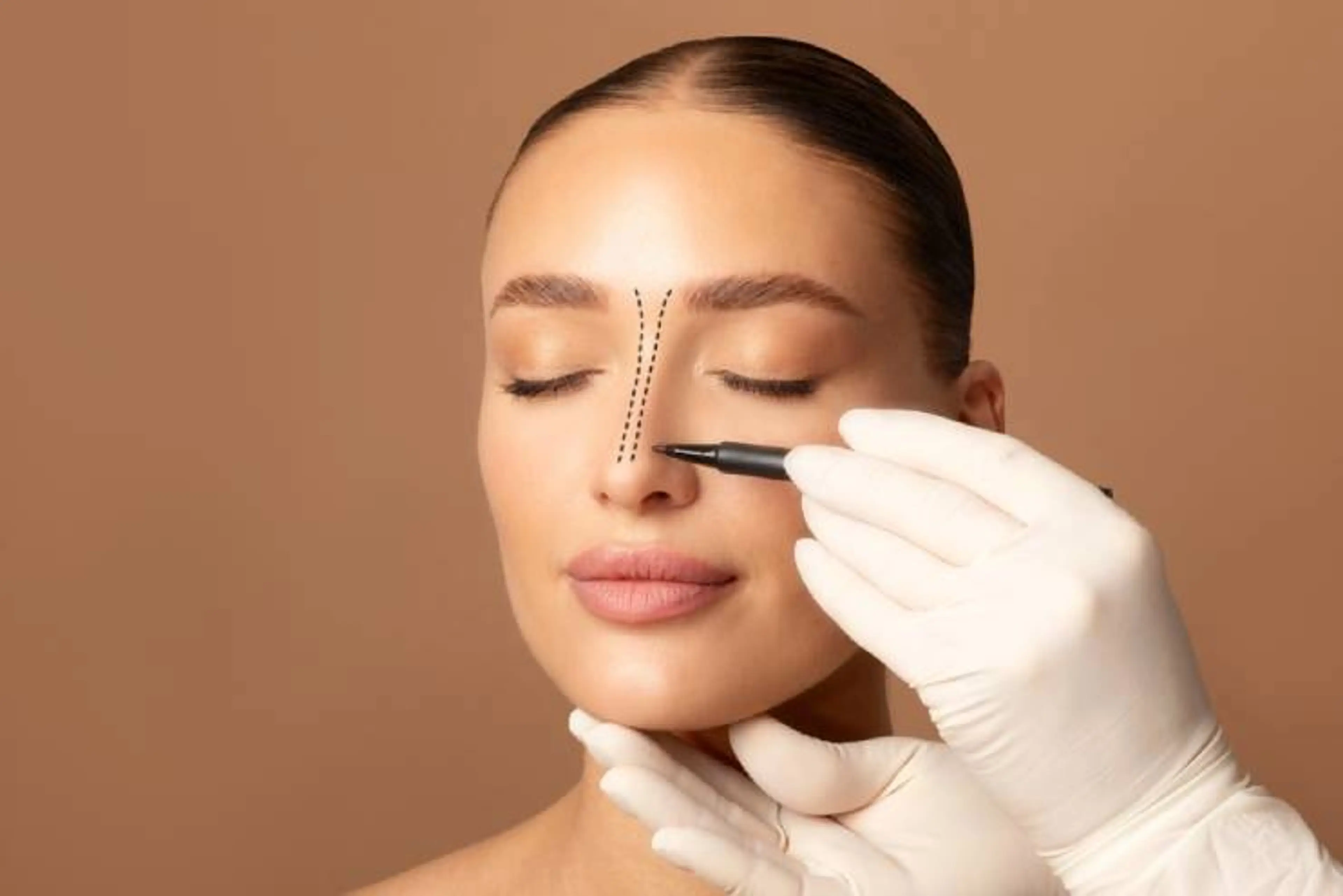
It’s a question many patients ask — sometimes directly, sometimes through their reflection.
it's-a-question-many-patients-ask-sometimes-directly-sometimes-through-their-reflection."My nose always looks slightly crooked in photos…"
"I feel like one side of my face looks sharper than the other. Could it be the nose?"
"I just want my features to feel more balanced, not ‘done’."
Facial symmetry has long been associated with attractiveness. But more importantly, it’s linked to harmony — that subtle sense of balance when all the features align naturally. At Kowon Plastic Surgery, located in the heart of Gangnam, we often meet patients who don’t necessarily want a “perfect” nose — they want a nose that brings the rest of their face into balance. And yes, rhinoplasty can absolutely play a role in that.
But the real answer is a little more nuanced.
Let’s explore what symmetry really means in facial aesthetics, how the nose influences that balance, and what modern rhinoplasty — especially the implant-free, rib cartilage-based approach we specialize in — can do to support it.
What Does Facial Symmetry Actually Mean?
what-does-facial-symmetry-actually-meanContrary to popular belief, perfect symmetry isn’t the goal — and it’s not even natural. Almost every face has mild asymmetries: one eye slightly higher, a jawline more pronounced on one side, a cheekbone more prominent.
These differences are often subconscious until something draws attention to them. For many patients, that “something” is the nose.
Because the nose sits right at the center of the face, any deviation — even a few millimeters — can visually exaggerate asymmetries elsewhere. A slightly off-center bridge, a nostril size mismatch, or a drooping tip on one side can make the whole face appear imbalanced.
This is where rhinoplasty enters — not as a quest for symmetry in isolation, but as a method of restoring facial harmony.
How the Nose Affects Facial Symmetry
how-the-nose-affects-facial-symmetry
Think of the nose as the spine of the face. If it's tilted, curved, or deviated, it can throw off the appearance of everything around it — the eyes, lips, even the eyebrows.
There are three main ways an asymmetric nose can disrupt facial balance:
Deviated Nasal Bridge: This is one of the most common concerns we see. Whether due to genetics or past trauma, a deviated bridge causes the nose to lean to one side. This skews how light falls across the face — a subtle but powerful influence on perceived symmetry.
Uneven Tip or Nostrils: When the nasal tip droops more on one side or one nostril is wider, it can create a visual “tilt” that doesn’t match the rest of the features. Even if the eyes or lips are balanced, the nose creates the illusion of imbalance.
Underlying Structural Asymmetry: In some cases, the asymmetry isn’t just in the nose, but in the underlying bone — such as a twisted septum or uneven nasal base. Correcting this isn’t just cosmetic — it can improve both function and form.
At Kowon, we often explain to patients:
“It’s not about chasing perfection. It’s about creating a nose that no longer draws attention for the wrong reasons — one that supports the natural flow of your facial features.”
So, Can Rhinoplasty Make You Look More Symmetrical?
so-can-rhinoplasty-make-you-look-more-symmetricalYes — when done thoughtfully and with structural integrity in mind, rhinoplasty can significantly enhance the overall symmetry of your face. But the key lies in how it’s done.
Here’s what that process involves:
1. Full-Face Assessment, Not Just the Nose
1.-full-face-assessment-not-just-the-noseMany clinics look at the nose in isolation. At Kowon, we always start with a comprehensive facial analysis. This includes:
Why? Because you can't design a nose without understanding the landscape it lives in. A narrow nose might suit one patient but look overly sharp on another. The goal is to create visual flow, not a one-size-fits-all result.
2. Addressing Deviations with Precision
2.-addressing-deviations-with-precisionDr. Kim Hyung Taek, our medical director, often sees patients who’ve had previous surgeries elsewhere — sometimes even multiple revisions — and still struggle with visible asymmetry.
In these cases, the issue isn’t just in the cartilage or skin. It’s in the underlying bone and structure.
Using advanced imaging and intraoperative adjustments, we:
Reshape the septum and nasal bones
Reposition the nasal base
Adjust nostril symmetry through internal framework changes
This is especially important in rib cartilage-based rhinoplasty, where the material must be sculpted and placed with millimeter accuracy. Even a slight tilt in the graft can create visual imbalance.
Why Implant-Free Techniques Improve Symmetry
why-implant-free-techniques-improve-symmetry
One of the unique philosophies at Kowon is our implant-free approach, especially for patients needing structural correction.
Here’s why this matters for symmetry:
Silicone implants can shift over time, especially in cases of asymmetry or revision. This causes secondary deviation or warping — sometimes worse than the original issue.
Rib cartilage, when harvested and sculpted correctly, allows for custom shaping that mirrors the patient’s natural anatomy.
Cartilage is integrated, not inserted — reducing the risk of foreign body movement that leads to later asymmetry.
In revision rhinoplasty cases, especially when the nose is twisted or collapsed, we often reconstruct the framework from the inside out. This allows us to realign the nose not only aesthetically, but functionally — restoring both balance and breathing.
"Many don’t realize that what looks like ‘crooked’ is often rooted in structural collapse or past trauma," says Dr. Kim. "We don’t just smooth the surface. We rebuild the architecture."
Case Insight: Asymmetry After a Previous Surgery
case-insight:-asymmetry-after-a-previous-surgeryA recent international patient came to us after two previous rhinoplasties in her home country. Her main complaint?
“My nose still pulls to the left, and my breathing is worse than before.”
CT imaging revealed a twisted septum, collapsed internal valve, and scar tissue pulling the tip off-center.
Using rib cartilage harvested from her own body, Dr. Kim:
Reconstructed the septum as a central support beam
Reinforced the internal valve for better airflow
Realigned the tip using a shield graft and soft tissue correction
The result? A nose that sat squarely in the center of her face — not only improving symmetry, but function and overall facial harmony.
Limitations to Keep in Mind
limitations-to-keep-in-mindRhinoplasty is powerful, but it’s not magic. Here are a few important truths:
Natural asymmetries in bone or muscles (like uneven cheeks or jaw shape) may remain. Rhinoplasty can improve harmony, but not erase genetics.
Skin thickness and elasticity can affect how results show. Thicker skin can mask delicate adjustments; thinner skin can reveal every contour.
Postoperative healing can influence final symmetry. Swelling often appears uneven at first and takes months to settle.
That’s why choosing a surgeon who understands both aesthetics and anatomy — and who plans conservatively — is essential.
Final Thought: It's About Balance, Not Perfection
final-thought:-it's-about-balance-not-perfectionAt Kowon Plastic Surgery, we often remind patients that the most beautiful results aren’t the ones that look “surgical.” They’re the ones where you stop noticing the nose altogether, because it fits — finally — with the rest of you.
So, can rhinoplasty make you more symmetrical?
Yes — but only if it’s done with a clear understanding of what symmetry really means. It’s not about drawing two lines down your face and making everything mirror perfectly. It’s about creating visual flow, restoring balance, and helping your features work in harmony.
If you’re considering rhinoplasty to correct asymmetry — whether it’s from birth, trauma, or previous surgery — look for a clinic that prioritizes structure, safety, and subtlety.
Considering Rhinoplasty for Asymmetry?
considering-rhinoplasty-for-asymmetryWhether you're dealing with a deviated nose, post-surgical complications, or simply want to bring more harmony to your facial features, Kowon Plastic Surgery in Seoul offers a high-safety, individualized approach to nasal refinement.
Dr. Kim Hyung Taek specializes in:
Implant-free, rib cartilage rhinoplasty
Complex revision rhinoplasty
Functional reconstruction with aesthetic balance
We don’t chase trends — we restore natural beauty with precision and care.
Next Step?
next-stepIf you're unsure whether your facial imbalance is related to your nose, or if you're seeking a safer revision after unsatisfying results, consult with a clinic that treats symmetry not as a goal, but as a process — like Kowon.
Located in Gangnam, Seoul — the heart of aesthetic medicine.
Led by Dr. Kim Hyung Taek — international speaker, professor, and expert in rib cartilage reconstruction.
Let’s create a nose that fits your face — not someone else’s idea of symmetry.