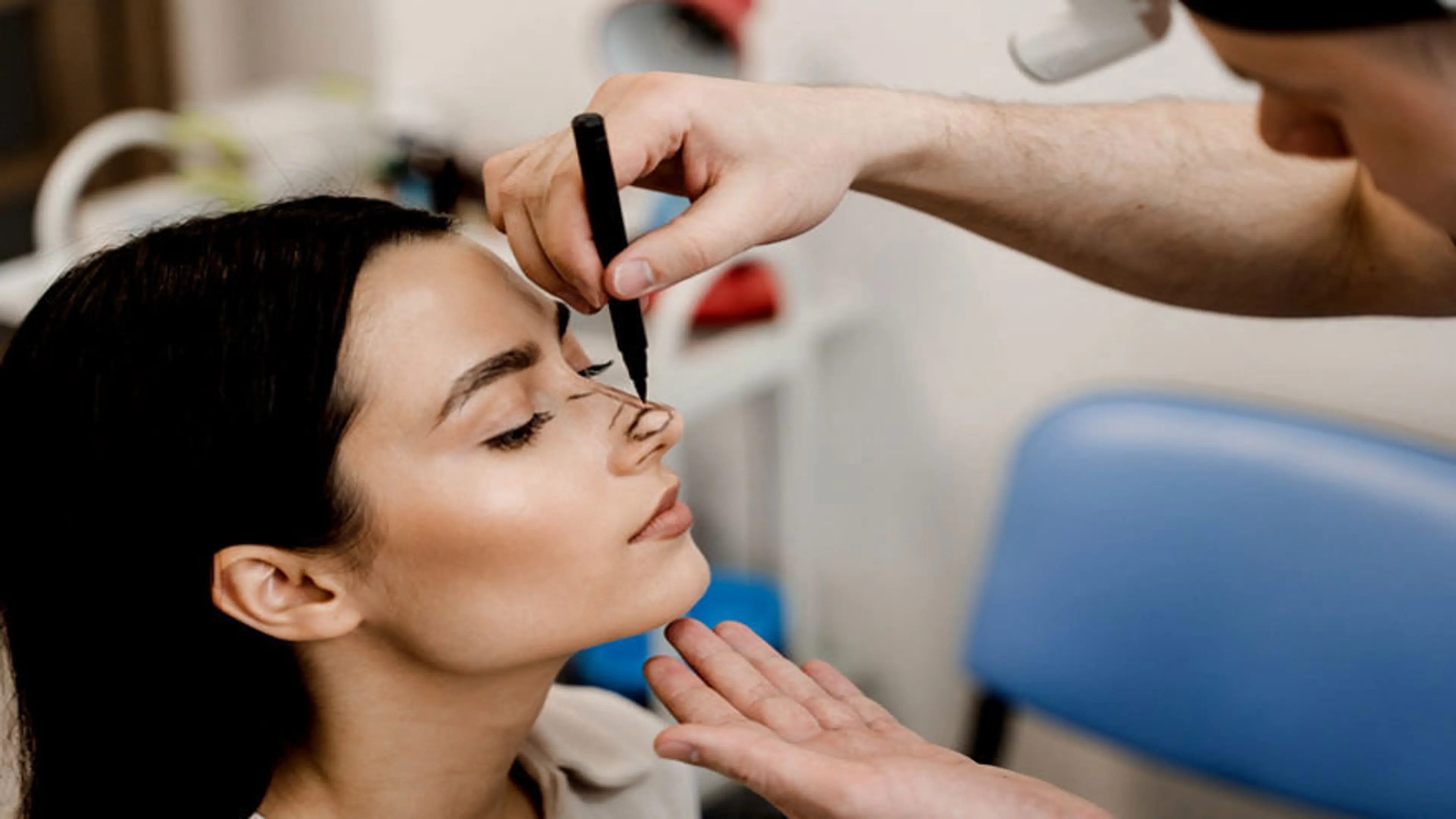
You’ve gone through the discomfort, the healing, and the anticipation of your first nose surgery. But weeks or even months later, something still doesn’t feel right. Maybe your breathing hasn’t improved — or worse, it’s gotten harder. Maybe your nose looks asymmetric, or you’re simply not satisfied with the results. If you’re nodding along, you’re not alone. Revision rhinoplasty — a second or third nose job — is more common than many people realize. But here’s the hard truth: timing is everything.
At Kowon Plastic Surgery, we often meet patients from around the world who are anxious to fix their previous rhinoplasty results as soon as possible. But jumping into revision surgery too quickly can cause more harm than good. So, how long should you wait before considering a revision nose job? And what really needs to heal before a second surgery is even safe?
Let’s break it down — with honesty, expertise, and the insights you won’t always hear elsewhere.
Why Revision Rhinoplasty Requires Patience (and Precision)
why-revision-rhinoplasty-requires-patience-(and-precision)Revision rhinoplasty is not just another nose job. It’s often more complex, more delicate, and more unpredictable than primary rhinoplasty. That’s because your nose has already been operated on. The anatomy has been changed, the tissues are healing, and internal scarring may be forming in ways that aren’t immediately visible.
What many patients don’t realize is that it takes up to a full year — and sometimes even longer — for the internal swelling, scar tissue, and structural shifts from the original surgery to fully settle. Until then, even the most skilled surgeon is operating on a moving target.
At Kowon Plastic Surgery, led by Dr. Kim Hyung Taek, we emphasize strategic timing as part of our safety-first philosophy. It’s not about rushing to fix the visible problems — it’s about making sure the foundation is stable enough to be rebuilt.
So, What’s the Ideal Waiting Period?
so-what's-the-ideal-waiting-period
While each patient is unique, the general guideline for revision rhinoplasty is:
Wait at least 12 months after your original surgery before undergoing a revision.
In certain cases with severe complications (e.g., infection, implant extrusion, or major deformity), earlier intervention may be necessary, but this should always be determined by an experienced revision specialist.
The 12-month rule exists for good reason:
Swelling and fibrosis (scar tissue formation) take time to stabilize.
Your nasal skin and soft tissue need to “settle” into their new position.
The true shape and functional impact of your first surgery may not fully reveal themselves until the 9–12 month mark.
If you intervene too early — say at 3 or 6 months — you may be trying to fix a problem that hasn’t finished evolving. Or worse, you might create new issues by operating on inflamed or fragile tissue.
Exceptions to the Rule: When Early Revision Is Necessary
exceptions-to-the-rule:-when-early-revision-is-necessaryWhile patience is ideal, there are situations where waiting a full year isn't always possible.
Some examples where early revision might be justified:
Infection or implant extrusion: If a silicone or Gore-Tex implant becomes infected or starts to protrude through the skin, urgent removal is needed. At Kowon, we typically remove problematic implants early and allow the nose to stabilize before considering a full revision.
Severe asymmetry or collapse: In some cases, early intervention can prevent long-term deformities — especially if the nose is collapsing inward or significantly off-center due to cartilage warping.
Obstructed breathing: If structural issues are causing significant functional impairment, a functional revision may be considered sooner, especially if the septum was over-resected.
In these cases, timing still matters — but it’s not a cookie-cutter decision. You need a surgeon who can evaluate the internal condition of your nose, not just the visible shape.
Why Emotional Healing Matters, Too
why-emotional-healing-matters-tooIt’s not just your nose that needs time — it’s your mind. Undergoing any cosmetic surgery is an emotional journey, and when the results don’t meet expectations, the disappointment can be overwhelming. Some patients describe feeling like they “lost” a part of their identity. Others become hyper-focused on small imperfections that might resolve with time.
This is where realistic expectations and psychological readiness play a big role in revision timing.
At Kowon Plastic Surgery, we often tell patients:
“If you’re still emotionally raw or obsessively checking your nose in the mirror every hour, you’re probably not ready yet — physically or mentally.”
We understand the urgency you might feel. But part of our job is to guide you with honesty and care, even if it means advising you to wait a little longer.
What Happens During a Revision Evaluation?
what-happens-during-a-revision-evaluation
If you’re considering revision rhinoplasty, the first step is not surgery — it’s an in-depth consultation.
Here’s what we evaluate at Kowon:
1. Skin and Soft Tissue Condition
1.-skin-and-soft-tissue-conditionHas the skin contracted? Is it still swollen? Thinned out from implants? This affects both aesthetics and surgical options.
2. Internal Scarring and Anatomy
2.-internal-scarring-and-anatomyUsing endoscopic tools and sometimes imaging, we assess how much scar tissue is present, and what internal structures may have been damaged or altered.
3. Implant or Cartilage Usage
3.-implant-or-cartilage-usageWas your original surgery done with an implant? Was it rib, septal, or ear cartilage? Are the grafts still viable, or is there warping?
4. Functional Assessment
4.-functional-assessmentCan you breathe properly? Is there septal deviation, valve collapse, or turbinate hypertrophy? These issues must be addressed alongside aesthetics.
5. Psychological Readiness
5.-psychological-readinessAre your goals realistic? Do you understand the limits of revision surgery? Are you emotionally prepared for another recovery?
Why Implant-Free Revision Is Often Safer
why-implant-free-revision-is-often-saferAt Kowon, Dr. Kim is globally recognized for his implant-free approach to both primary and revision rhinoplasty. This is especially important in revision cases where previous implants have caused:
Skin thinning or transparency
Infection or inflammation
Foreign body reaction
Implant shifting or warping
Using the patient’s own rib cartilage, we can reconstruct the nose more naturally and with lower long-term risk. Rib cartilage is strong, moldable, and — when reshaped with finesse — offers both support and subtlety.
Of course, harvesting rib cartilage requires technical expertise and anatomical precision. But in skilled hands, it avoids many of the complications we see from synthetic implants.
A Real-World Example: “I Rushed Into My Second Surgery… and Regretted It”
a-real-world-example:-"i-rushed-into-my-second-surgery...-and-regretted-it"One of our recent international patients came to Kowon after having two rhinoplasties within 18 months — both performed outside of Korea. Her second surgery was done only five months after the first, and while it improved one minor hump, it left her with worsened asymmetry and nasal tip drooping.
By the time she arrived at our clinic, she was dealing with scarred tissue, a collapsed nasal valve, and implant displacement. We advised waiting an additional 6 months to allow the tissue to mature. After that period, we removed the implant, rebuilt the structure using rib cartilage, and restored both her appearance and breathing function.
Her story is not unusual — but it’s preventable.
Final Thought: The Best Revision May Be the One You Wait For
final-thought:-the-best-revision-may-be-the-one-you-wait-forRevision rhinoplasty is about restoring balance — not only in your nose, but in your confidence and quality of life. But great results don’t come from quick fixes. They come from careful planning, technical excellence, and above all, timing.
If you’re unsure whether it’s the right time to pursue revision surgery, here’s what we recommend:
Wait at least 12 months from your last rhinoplasty — unless serious complications require earlier action.
Choose a clinic that specializes in high-safety, low-volume revision surgeries.
Look for expertise in implant-free, rib cartilage-based reconstruction.
Make sure your surgeon evaluates both function and aesthetics — not just the visible result.
And most importantly, trust your healing process — inside and out.
Considering a Second (or Third) Nose Job? Let’s Talk.
considering-a-second-(or-third)-nose-job-let's-talk.At Kowon Plastic Surgery, we’ve helped thousands of patients reclaim their confidence after failed or unsatisfying rhinoplasties. Whether you’re dealing with functional problems, visible deformities, or implant complications, we’re here to offer expert guidance and honest recommendations — not rushed decisions.
Located in the heart of Gangnam, Seoul, our clinic provides deeply personalized care under the leadership of Dr. Kim Hyung Taek, one of Korea’s foremost specialists in rib cartilage rhinoplasty.
If you're thinking about revision rhinoplasty, start with a consultation — not a calendar. Let’s figure out if your nose is truly ready… and if we’re the right place to help you heal.