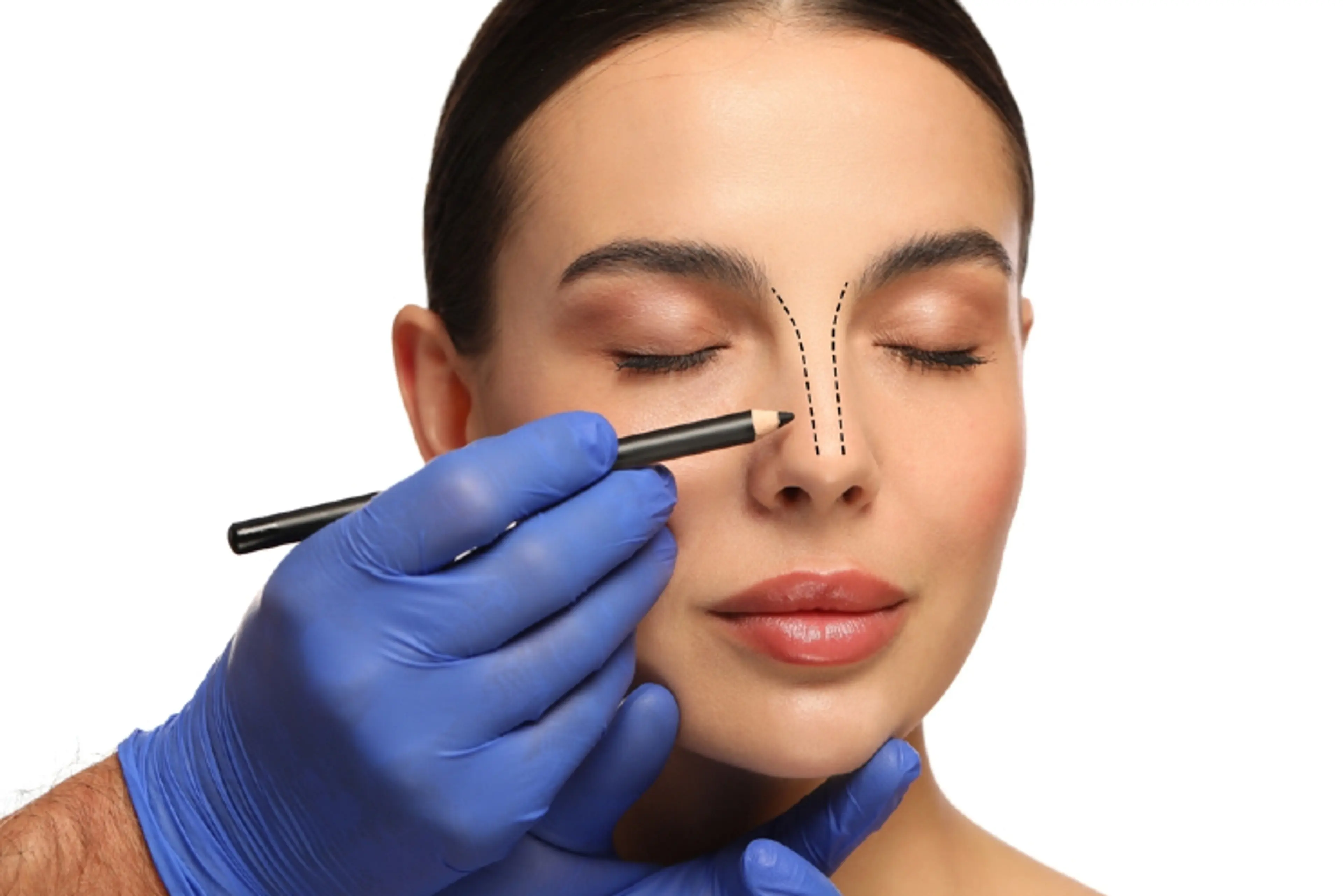
Why “getting it right the first time” matters more than you think.
Let’s start with a scenario we see far too often at Kowon Plastic Surgery:
A patient walks in with a look of quiet frustration. They’ve already had one — sometimes two — rhinoplasty surgeries. On the outside, the nose may appear “done,” but something still feels off. Perhaps there’s a visible irregularity. Or breathing is worse than before. Or they simply don’t feel like themselves when they look in the mirror.
They’re here because they’re considering a revision. But like many who have walked this path before, they ask the question we wish more people would ask before their first surgery:
“How can I avoid ending up here in the first place?”
This article is our answer to that question — drawn from nearly two decades of rhinoplasty expertise, 10,000+ successful cases, and a deeply held philosophy that nasal surgery should never be rushed or cookie-cutter.
Why Revision Rhinoplasty Is So Common (and So Avoidable)
why-revision-rhinoplasty-is-so-common-(and-so-avoidable)The global demand for rhinoplasty has soared, especially in aesthetic hubs like Seoul. Yet revision rhinoplasty — the need for corrective or secondary surgery — is also on the rise.
Why?
Too many primary surgeries prioritize appearance at the expense of structure and function. Many use off-the-shelf implants that can shift, become infected, or look unnaturally rigid over time. And even well-meaning surgeons sometimes overlook the long game: how the nose will age, move, and breathe in the real world.
What many don’t realize is that natural results take careful planning, not shortcuts. Revision rhinoplasty is complex, often requiring reconstruction of lost or damaged tissue — especially when silicone implants or over-resection are involved.
That’s why we believe the real key is prevention.
1. Choose a Surgeon Who Balances Form and Function
1.-choose-a-surgeon-who-balances-form-and-functionYour nose isn’t just an aesthetic feature — it’s a living, breathing structure with complex internal architecture. When surgery only focuses on the outer shape, function often suffers.
At Kowon, we assess every patient’s nasal function before surgery.
That means checking airflow, septal alignment, and internal valve integrity — the “hidden architecture” that supports both breathing and structure.
What to Look For:
what-to-look-for:A surgeon with experience in both cosmetic and functional rhinoplasty
Clinics that do pre-op CT scans or airflow evaluations
A philosophy that emphasizes structure preservation, not just reshaping
As Dr. Kim Hyung Taek often says,
“The most beautiful nose is one that looks natural and breathes effortlessly.”
2. Be Wary of Implants (Especially Silicone)
2.-be-wary-of-implants-(especially-silicone)In Korea and much of Asia, it’s common to use silicone implants to build height or projection. While they can work short-term, they come with long-term risks:
Shifting, extrusion, infection, and unnatural contours — especially as skin thins or contracts over time.
Our Approach: Implant-Free, Rib Cartilage-Based Rhinoplasty
our-approach:-implant-free-rib-cartilage-based-rhinoplastyAt Kowon, we specialize in using autologous rib cartilage — your body’s own tissue — to shape and support the nose. It may sound more complex, but the benefits are clear:
Lower risk of rejection or infection
More natural movement and texture
Stronger long-term support, especially in bridge or tip reconstruction
This is especially critical in revision cases, where previous implants have already caused tissue damage or scarring.
“Building a nose with your own cartilage is like crafting a house with your own bricks — it integrates better, lasts longer, and looks more like you.”
3. Avoid “One-Size-Fits-All” Surgery Plans
3.-avoid-"one-size-fits-all"-surgery-plans
A nose that looks perfect on one face might feel completely out of place on another. Facial balance is more important than trends — and over-projected “ideal” noses often age poorly or require revision later.
What Personalized Planning Looks Like:
what-personalized-planning-looks-like:3D imaging or morph simulation based on your unique anatomy
Honest conversations about what’s achievable and what’s safe
A design philosophy that respects your ethnic identity and facial harmony
At Kowon, we don’t aim to make every nose look the same — we aim to make your nose look like your best self.
4. Don’t Rush the Decision (Or the Surgery)
4.-don't-rush-the-decision-(or-the-surgery)We understand — once you’ve decided to do rhinoplasty, it’s tempting to book the earliest available date and get it over with. But speed can be the enemy of safety.
Too many revision patients tell us they regret not taking more time to choose their clinic or fully understand the procedure. Sometimes, their first surgery lasted less than an hour. That’s not always a red flag — but it can be.
At Kowon, we limit the number of surgeries per day to ensure each case gets our full focus. Revision surgeries, in particular, require microsurgical precision and a deep understanding of tissue behavior.
“If a surgeon treats your nose like a project to finish quickly, chances are, you’ll be revisiting that project again.”
5. Trust the Post-Op Process — Healing Takes Time
5.-trust-the-post-op-process-healing-takes-timeBelieve it or not, some patients seek revisions only a few months after their primary surgery — before swelling has fully settled or tissues have stabilized.
Swelling can distort results for up to a year, especially in the tip. Scar tissue continues to remodel even after six months. Premature revisions not only risk worse outcomes — they can create scar layering that makes future correction more difficult.
What You Can Do:
Follow all post-op care instructions precisely
Attend all follow-up appointments
Be patient — especially if your surgeon has a conservative, safety-first style
At Kowon, we provide structured post-op guidance and long-term follow-up. Because how you heal is just as important as how you’re operated on.
Bonus: What If You Already Had Surgery and Aren’t Satisfied?
bonus:-what-if-you-already-had-surgery-and-aren't-satisfiedIf you’ve had rhinoplasty and still feel something isn’t right — whether aesthetically or functionally — don’t panic. But don’t rush into another surgery either.
First, consult with a specialist who has deep experience in revision rhinoplasty — not just primary cases. Revision surgery is not just a repeat; it’s a reconstruction. It demands a different skill set, more planning, and often rib cartilage grafts to rebuild support.
Dr. Kim Hyung Taek is one of Korea’s few surgeons who specializes in rib cartilage-based revision, with a focus on both structure restoration and aesthetic refinement.
We often see patients from around the world who were told revision wasn’t possible — or too risky. In the right hands, it is possible — safely and naturally.
The Bottom Line: Prevention Is the Best Revision
the-bottom-line:-prevention-is-the-best-revision
Choosing the right surgeon and surgical philosophy from the start can spare you years of regret, discomfort, or additional procedures. At Kowon Plastic Surgery, we believe in doing it right the first time — with precision, personalization, and preservation at the core of every case.
If you're considering rhinoplasty, especially in Korea, ask yourself:
Does the clinic prioritize structure and function?
Is the plan customized, not copy-pasted?
Are they pushing for implants — or offering safer alternatives?
Do they take time — or rush through surgery?
Your nose is not a quick fix. It’s the center of your face, your breathing, and your identity.
Considering Rhinoplasty in Korea?
considering-rhinoplasty-in-koreaKowon Plastic Surgery in Gangnam is known for:
✔ Implant-free, rib cartilage rhinoplasty
✔ High-safety revision rhinoplasty
✔ Function-preserving techniques
✔ Surgeon-led, limited-volume care
We’re here for patients who want natural results — and peace of mind.
Thinking about revision or first-time rhinoplasty?
thinking-about-revision-or-first-time-rhinoplastyStart with a consultation that puts your safety and individuality first.
Reach out to Kowon Plastic Surgery — and let’s build something that lasts.