Home / Articles
Liquid Rhinoplasty vs. Traditional Nose Job: What’s Better?
Home / Articles
Liquid Rhinoplasty vs. Traditional Nose Job: What’s Better?
The answer depends on your goals, your anatomy, and—most importantly—your long-term vision for your face. At our clinic in Gangnam, Seoul, we specialize in high-precision surgical rhinoplasty, including complex revisions and functional reconstruction. But we also recognize the role of non-surgical options when chosen wisely.
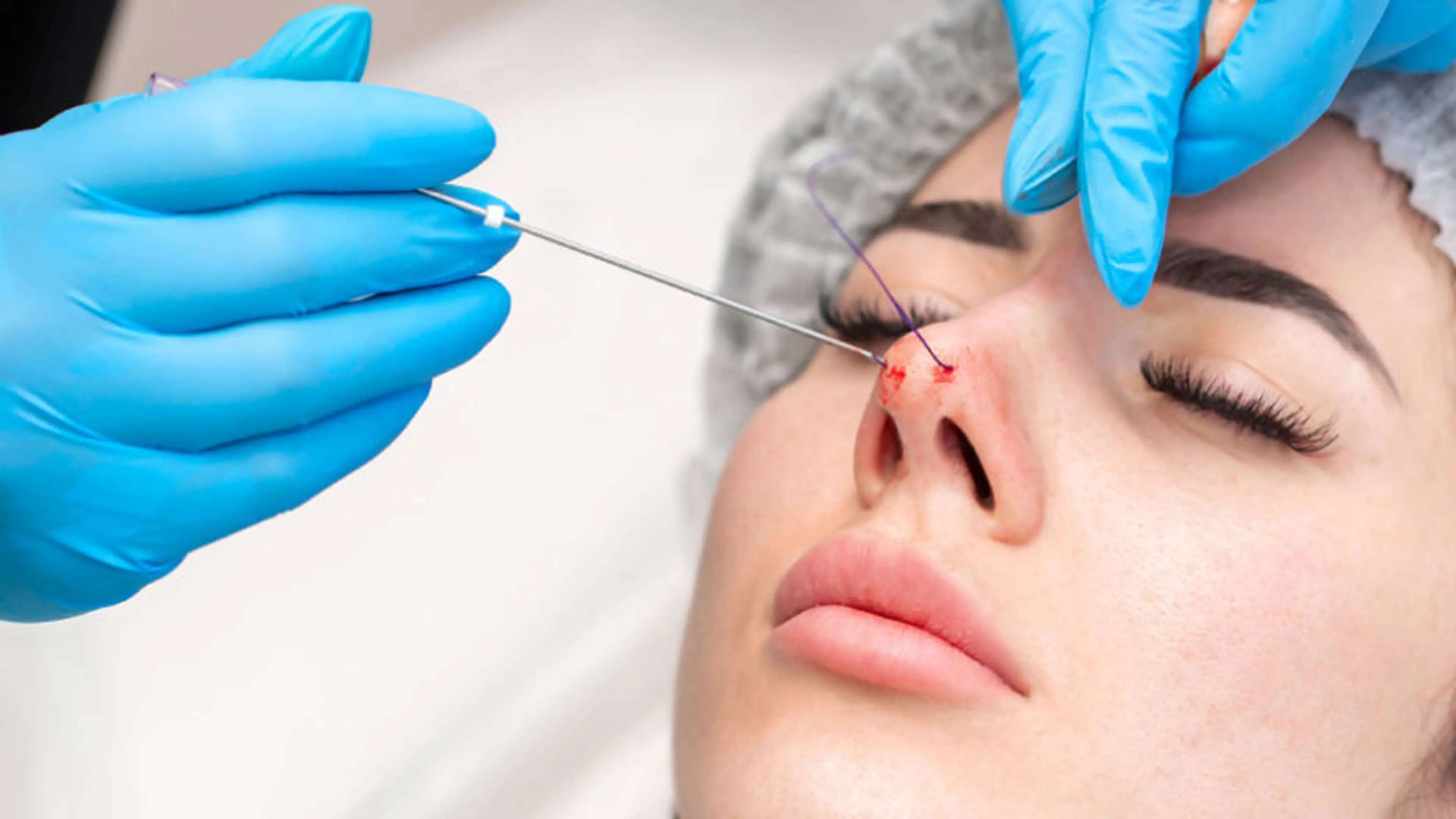
Liquid rhinoplasty, often called a “non-surgical nose job,” involves injecting dermal fillers (typically hyaluronic acid-based) into specific areas of the nose to temporarily reshape it. Common treatment zones include the nasal bridge, tip, or asymmetrical dips along the sidewalls.
The appeal is obvious: no cutting, no anesthesia, no downtime. Results are visible immediately after the procedure.
However, liquid rhinoplasty is not a true substitute for surgery. It's more like applying makeup to contour the nose — you can enhance or disguise features temporarily, but you cannot change the underlying structure.
Traditional rhinoplasty involves the surgical reshaping of the nose’s bone and cartilage framework. It is performed to improve cosmetic appearance, functional breathing, or both. The procedure can address a dorsal hump, wide tip, crooked nose, or internal nasal issues such as a deviated septum or valve collapse.
While surgery requires downtime and a longer recovery process, it offers something that fillers cannot: a permanent, structurally sound transformation tailored to your unique anatomy.
Immediate results, often within 30 minutes
No surgery or anesthesia required
No recovery downtime
Reversible if hyaluronic acid fillers are used
Results last only 6 to 18 months
Cannot reduce the size of the nose
Cannot improve breathing or fix internal structure
Risk of vascular complications such as tissue necrosis or vision loss (though rare)
Repeated filler use can distort natural anatomy over time
Dr. Kim notes, “We often see patients who had years of fillers and now want a permanent solution. The challenge is that repeated injections can stretch the skin or camouflage defects, making surgical correction more difficult.”
Permanent reshaping of the nose’s structure
Can refine size, shape, and internal function
One-time procedure (when done correctly)
Aesthetic and functional improvements combined
Custom-planned to suit your facial proportions
Requires downtime (typically 7 to 14 days off work or school)
Swelling can persist for several months
Higher initial cost than non-surgical options
Requires meticulous surgical planning and execution
Rhinoplasty is not a cosmetic shortcut. It’s a comprehensive transformation of a central facial feature, and the surgeon must consider aesthetics, structure, function, and long-term tissue behavior. That’s why the decision between filler and surgery is not simply a matter of convenience—it’s a matter of purpose.
There is no one-size-fits-all answer. The better choice depends entirely on your needs and expectations.
You want to preview subtle changes before committing to surgery
Your nasal structure is already balanced and only needs small refinements
You are not concerned with internal function or breathing
You understand and accept that results are temporary
You want permanent reshaping or size reduction
You have breathing difficulties or prior nasal trauma
You’ve already had a nose job that didn’t meet your expectations
You want structural stability and long-term harmony with your facial features
Think of it this way: liquid rhinoplasty is cosmetic editing. Surgical rhinoplasty is architectural remodeling.
“I had fillers to hide a bump, but now my nose looks wider.”
“The filler migrated, and the tip looks bulbous.”
“I’ve lost some skin elasticity after years of injections.”
“The clinic kept recommending more filler instead of offering a long-term solution.”
In these cases, patients feel frustrated—not just by the outcome, but by the realization that the underlying problem was never truly addressed. And in some instances, repeated filler use has made surgery more complex due to tissue stretching or scarring.
This is why we urge patients to think beyond the surface. Filler can be helpful for the right candidate, but it is not a cure-all.
Although liquid rhinoplasty is non-surgical, it is not without risks. The nose has a dense network of blood vessels. If filler is accidentally injected into a vessel, it can lead to serious complications like tissue necrosis or, in rare cases, blindness.
These risks underscore the importance of having the procedure performed by a highly skilled provider—ideally, one trained in surgical rhinoplasty who understands nasal anatomy at a deep level.
At many clinics, dorsal implants (often silicone or Gore-Tex) are commonly used to augment the bridge. But these synthetic materials can shift, thin the skin, or become infected over time.
Customized shaping of the bridge or tip
Long-term stability without the risk of foreign-body reactions
Seamless integration with surrounding tissues
More natural aesthetics, especially in patients with thin skin
As Dr. Kim explains, “The nose is like the foundation of a building. You can paint the walls all you like, but if the structure isn’t sound, nothing will last. Our job is to rebuild that foundation properly.”
Liquid rhinoplasty in Korea typically costs between ₩400,000 and ₩1,000,000 per session. Surgical rhinoplasty, especially complex cases involving rib cartilage grafting, can range from ₩5,000,000 to ₩15,000,000 depending on the details of the case.
While liquid rhinoplasty has a lower entry cost, patients often return every 12 to 18 months for maintenance. Over time, the cumulative cost of filler can exceed that of surgery—without offering a permanent solution.
Surgical rhinoplasty is an investment in long-term results and facial harmony.
If you're unsure whether to start with filler or move forward with surgery, ask yourself:
Am I looking for a quick fix or a lasting change?
Is my concern cosmetic only, or is function involved?
Do I want to enhance what’s there, or truly reshape it?
There is nothing wrong with choosing non-surgical methods, especially if you're still exploring your options. But if your nose affects your confidence, your breathing, or your comfort with your appearance, it may be time to pursue a definitive solution.
Our clinic is trusted by patients from around the world for:
Dr. Kim Hyung Taek leads every procedure with nearly 20 years of surgical experience and a commitment to natural results, internal balance, and patient-specific planning. Whether you're exploring rhinoplasty for the first time or seeking correction after previous procedures, we provide deeply personalized, medically sound care in the heart of Seoul’s aesthetic hub.
If you’re considering nasal enhancement, start by identifying your long-term goals. If temporary improvement is your goal, filler may be appropriate. But if you seek lasting, natural refinement—whether in form, function, or both—surgical rhinoplasty under an expert like Dr. Kim may be the better path.