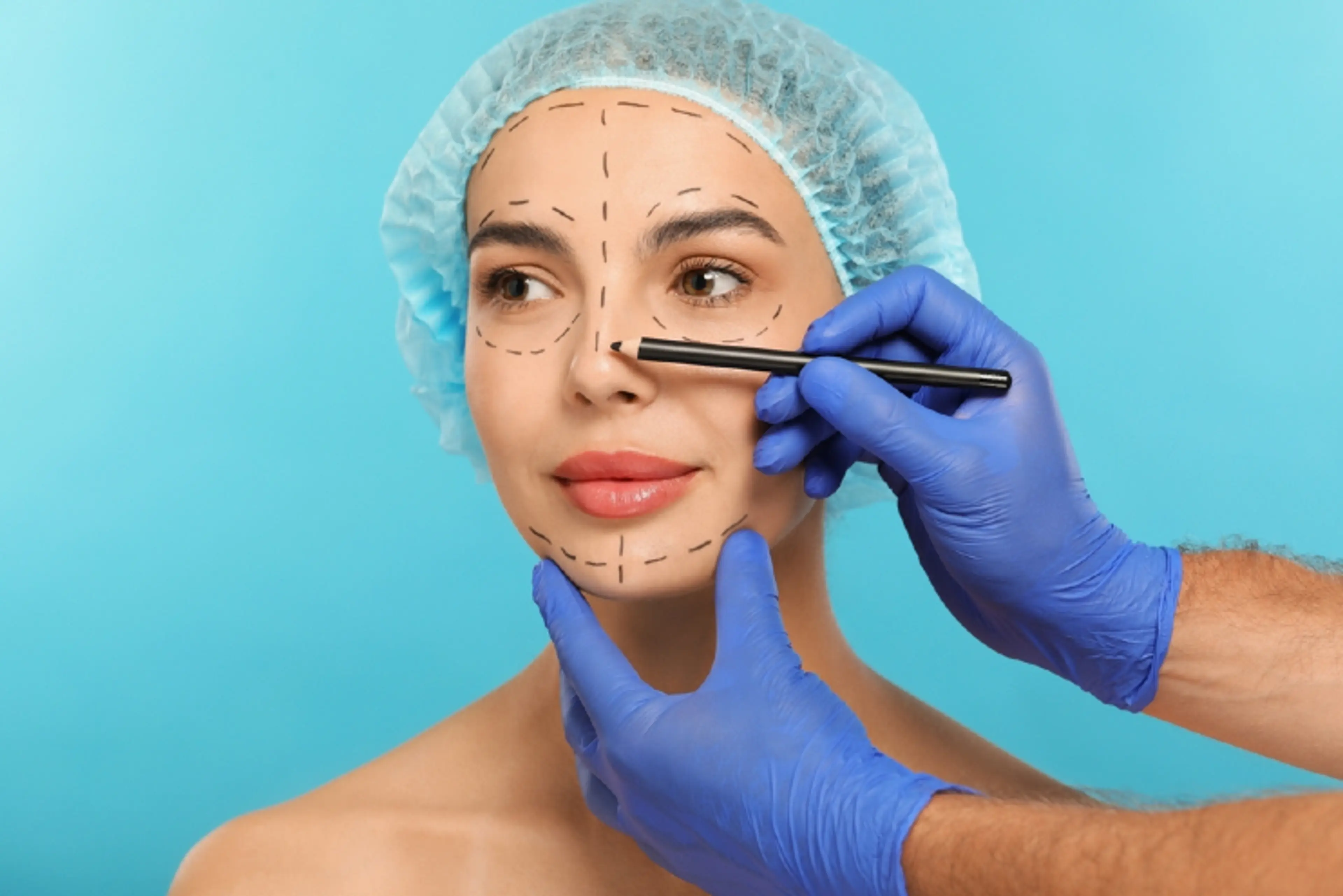
Refining the nose’s most expressive feature without overdoing it
When most people think of rhinoplasty, they picture full nasal reconstruction — reshaping the bridge, correcting the septum, lifting or narrowing the tip. But not every patient needs that level of intervention.
In fact, at Kowon Plastic Surgery, we frequently consult with patients whose main concern is isolated to the tip of the nose:
“My bridge looks fine, but the tip droops when I smile.”
“I just want the bulbous look gone — not a totally new nose.”
“The top is okay, but the bottom looks heavy and undefined.”
If this sounds familiar, you may be a good candidate for tip-only rhinoplasty — a highly specialized procedure that focuses on subtle changes to the nasal tip, leaving the rest of the nose untouched. But it’s important to understand that tip work is more complex than it appears.
Let’s break down what tip rhinoplasty really involves — and whether it’s right for you.
Why the Tip Matters So Much
why-the-tip-matters-so-muchThe nasal tip may be small, but it plays an outsized role in how your nose — and your entire face — is perceived. It affects:
How long or short your nose appears
The angle between your nose and upper lip
Facial balance and harmony from the side and front
Your smile and expressions
What many don’t realize is that even minor changes to the tip can dramatically improve facial definition without the need for major structural reshaping. That’s why, when done correctly, tip refinement often leads to comments like:
“You look refreshed — did you change your hair?”
Not, “You had surgery.”
What Is Tip-Only Rhinoplasty?
what-is-tip-only-rhinoplastyTip-only rhinoplasty (also called tip plasty) is a surgical procedure that focuses exclusively on reshaping, rotating, or refining the lower third of the nose. It does not involve work on the nasal bridge (dorsum) or bones.
Common issues addressed include:
Bulbous or wide nasal tip
Droopy tip or tip that falls when smiling
Over-projected or under-projected tip
Asymmetry between left and right tip cartilages
Thick or undefined tip in thick-skinned patients
At Kowon Plastic Surgery, we customize every tip procedure based on both anatomical structure and skin thickness, especially important for Korean and East Asian patients whose tip definition is often hidden by soft tissue.
When Is Tip-Only Rhinoplasty Appropriate?
when-is-tip-only-rhinoplasty-appropriateNot every patient is a candidate. Tip plasty is best suited for those who:
Are happy with the height and shape of their nasal bridge
Have no significant breathing issues or septal deviations
Have isolated aesthetic concerns with the shape, size, or rotation of the nasal tip
Are seeking a natural, conservative change rather than a full facial transformation
That said, tip-only procedures require just as much surgical precision — if not more — than full rhinoplasty. Why?
Because when the bridge is untouched, any imbalance or overcorrection in the tip becomes much more noticeable. The surrounding features provide no “buffer” — every millimeter matters.
What Makes Tip Work So Technically Demanding?
what-makes-tip-work-so-technically-demanding
One of the biggest misconceptions is that tip rhinoplasty is simpler than full rhinoplasty. But ask any experienced surgeon, and they’ll tell you:
“Tip surgery is where finesse makes or breaks the result.”
Here’s why tip rhinoplasty requires expert-level skill:
1. Small Area, Big Impact
1.-small-area-big-impactThe tip consists of delicate cartilage structures (lower lateral cartilages), soft tissue, and skin — all working in balance. If one element is modified without proper support, it can lead to asymmetry, collapse, or long-term deformities.
2. Thicker Skin Can Blur the Outcome
2.-thicker-skin-can-blur-the-outcomeMany Korean and East Asian patients have thicker nasal skin, especially around the tip. That means cartilage shaping has to be done with clear long-term projection in mind — or the final results won’t show through the skin.
Dr. Kim Hyung Taek often uses strategic cartilage grafting, sometimes with rib cartilage, to support and elevate the tip from the inside — especially in cases where projection is lacking.
3. Smiling Dynamics Are Affected
3.-smiling-dynamics-are-affectedThe tip is closely connected to muscles that move when you smile or speak. A well-done tip surgery should maintain natural expression while minimizing unwanted drooping or pulling. This takes deep anatomical knowledge and subtle suture techniques.
Implant-Free Tip Refinement — Why It Matters
implant-free-tip-refinement-why-it-mattersAt Kowon, we do not use silicone or artificial implants, even for minor tip reshaping. Instead, we rely on natural cartilage grafts — either from the nasal septum (if untouched) or from the rib in revision or complex cases.
Why? Because:
Implants can become visible or mobile over time — especially in the flexible tip area
Natural cartilage integrates better and allows custom shaping
Long-term safety and structural support are significantly better
For patients who had prior augmentation rhinoplasty with silicone implants and now want only the tip revised, we may recommend removing the implant and rebuilding the tip and bridge with autologous (your own) cartilage for a more stable, natural result.
How Long Is Recovery for Tip Rhinoplasty?
how-long-is-recovery-for-tip-rhinoplastyBecause there’s no bone work involved, tip-only rhinoplasty generally involves less bruising and swelling than full rhinoplasty. That said, the tip is where swelling lingers longest — often several months.
Here’s a general timeline:
First 1–2 weeks: Initial swelling, some stiffness, taping or light dressing
3–4 weeks: Most visible swelling subsides
3–6 months: Tip refines gradually as swelling resolves
1 year: Final tip definition visible
At Kowon, we follow all patients closely during this period, offering swelling management treatments and recovery guidance personalized to each case.
Can Tip-Only Rhinoplasty Be Done for Revisions?
can-tip-only-rhinoplasty-be-done-for-revisionsYes — but with caution.
In revision cases, the tip may have scar tissue, cartilage damage, or skin thinning from previous surgeries. Dr. Kim specializes in complex revision rhinoplasty, and often uses rib cartilage to rebuild and support the tip safely.
Whether you're a first-time patient or seeking correction after an unsatisfactory result, tip revision can be performed — but it requires precise assessment and individualized planning.
What Results Can You Expect?
what-results-can-you-expect
Patients who undergo tip-only rhinoplasty at Kowon typically report:
A more refined, balanced nasal shape
Improved projection or rotation without dramatic change
A nose that feels more aligned with their natural features
Minimal signs of surgery once swelling resolves
Best of all, friends and family often can’t pinpoint the change — they just say, “You look well.” That’s exactly what subtle, high-precision nasal tip work is meant to achieve.
Final Thought: Small Area, Big Expertise
final-thought:-small-area-big-expertiseThe nasal tip may seem like a small detail — but in rhinoplasty, it’s where surgical skill, aesthetic judgment, and structural planning truly come together.
Whether you're frustrated by a droopy smile line, a bulbous tip, or want more definition without changing your overall look, tip-only rhinoplasty might be the answer. But it should only be done by a clinic with deep expertise in cartilage shaping, structural grafting, and natural outcomes.
That’s what Kowon Plastic Surgery — led by Dr. Kim Hyung Taek — is known for. With over 19 years of experience and a no-implant, high-safety approach, we help patients refine their nasal tip with confidence, clarity, and long-term results.
Considering tip-only rhinoplasty?
Book a consultation at Kowon to explore whether targeted, natural refinement is right for your nose — and your face.