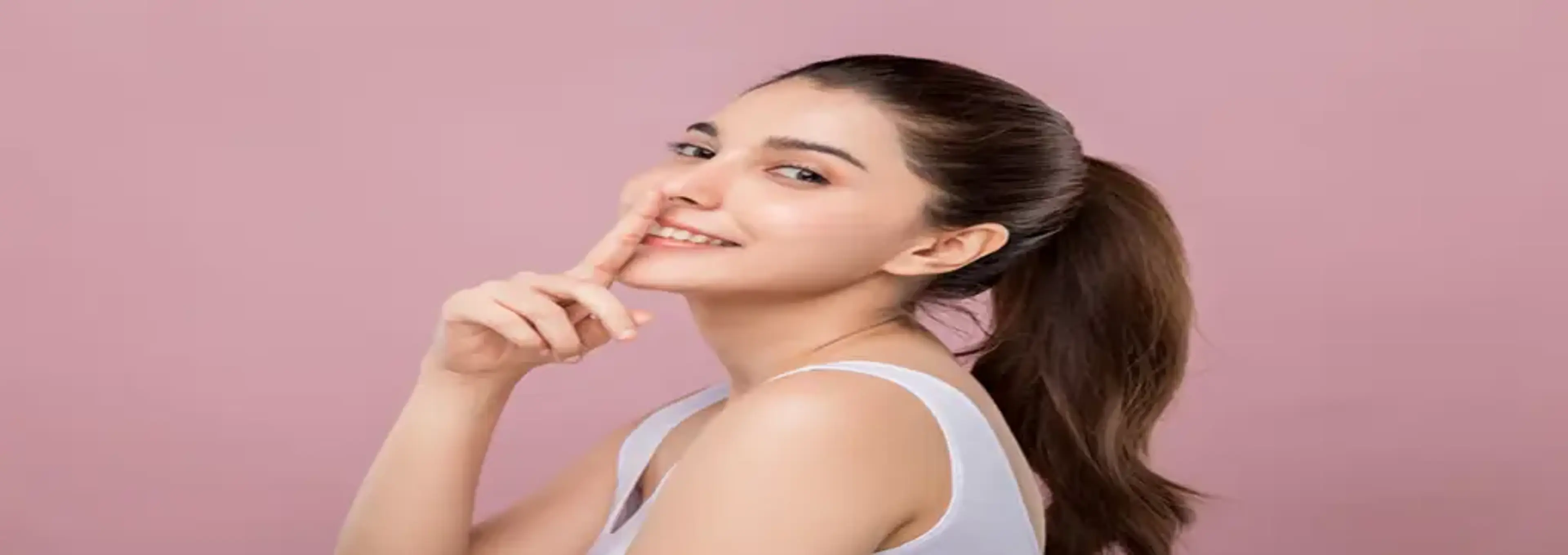
Let’s be honest: we live in a photo-first world. Whether it’s a group shot at brunch or a professional headshot on LinkedIn, our faces are constantly on display. And for many people, one feature tends to draw their attention more than any other — the nose.
At Kowon Plastic Surgery in Gangnam, we often hear patients say:
“I didn’t mind my nose that much until I saw it in photos.”
Or: “I look fine in the mirror… but in pictures, something feels off.”
What many don’t realize is that how your nose photographs is often very different from how it looks in motion or in real life. But rhinoplasty — especially when done with artistry and precision — can reshape the way your features harmonize both in person and on camera.
This article breaks down how rhinoplasty helps improve your appearance in photos, the science behind facial angles and proportions, and why achieving natural, photogenic results takes far more than just reducing a hump or lifting the tip.
Why the Nose Stands Out in Photos — Even If You Don’t Think It’s “Big”
why-the-nose-stands-out-in-photos-even-if-you-don't-think-it's-"big"Your nose is the central anchor of your face. It sits at the intersection of key facial planes — the frontal, profile, and three-quarter views. This centrality makes it disproportionately visible in photos, especially under harsh lighting or from specific angles like selfies taken slightly from below.
A few reasons your nose may seem more prominent in photos than in real life:
Camera distortion: Wide-angle lenses, particularly on smartphones, exaggerate the center of the image — making the nose appear larger and rounder.
Lighting: Shadows cast along the nose can highlight asymmetries or dorsal humps that aren't noticeable in person.
Flatness: 2D photos compress the three-dimensional contours of the face, removing depth and softening features that otherwise balance the nose (like cheekbones or jawlines).
All of this means that a nose that feels “fine” in the mirror may appear more prominent, curved, or asymmetrical in pictures — especially those taken at arm’s length or with high contrast lighting.
What Makes a Nose Photogenic?
what-makes-a-nose-photogenic
Contrary to what some believe, there’s no one-size-fits-all “perfect” nose. A photogenic nose is not necessarily small or upturned — it's proportional, balanced, and in harmony with the rest of the face.
At Kowon Plastic Surgery, we often describe the nose as the foundation of facial harmony, much like the root chord in a musical composition — subtle, but essential. When it's slightly off, everything feels off. But when it's tuned just right, the entire composition (your face) comes together beautifully.
Key characteristics of a photogenic nose include:
Straight and smooth nasal bridge (no humps or depressions)
Tip refinement — not too bulbous or pinched
Good nasolabial angle — the angle between your upper lip and the bottom of your nose should be aesthetically pleasing in profile
Symmetry from the front view — even slight deviations can look exaggerated in photos
Proper projection — not too flat, not too protruding
Rhinoplasty addresses these features not just to change the nose, but to balance it with your unique facial structure — so that when the camera captures your face, no one feature overpowers the rest.
Rhinoplasty and the "Three Angles That Matter" in Photography
rhinoplasty-and-the-"three-angles-that-matter"-in-photographyMost people don’t realize how important viewing angles are in determining how their nose appears in photos. During a consultation, we often walk patients through what we call the three angles that matter:
1. The Frontal View
1.-the-frontal-viewThis is the most common type of photo — head-on, smiling.
In this view, a deviated septum, wide nasal bones, or asymmetrical nostrils are most noticeable. A well-balanced rhinoplasty can help straighten and narrow the nose slightly for a more symmetrical, composed appearance.
2. The ¾ View (Oblique Angle)
2.-the-view-(oblique-angle)This is where many patients first notice issues in photos.
The nasal tip shape, bridge profile, and any dorsal hump are highly visible here. Subtle irregularities or a droopy tip become more pronounced. A thoughtful rhinoplasty addresses these issues while preserving natural curvature.
3. The Profile View
3.-the-profile-viewSide photos are where humps, hooks, or under-projected tips really stand out.
Many patients dislike their side profile because the nose breaks the smooth silhouette of their facial line. A profile-balancing rhinoplasty — especially one done implant-free with rib cartilage, as we specialize in at Kowon — can reshape the bridge and tip for elegant, proportionate results.
Why Quick Fixes Don’t Work (and May Make Things Worse in Photos)
why-quick-fixes-don't-work-(and-may-make-things-worse-in-photos)With the rise of fillers and “non-surgical nose jobs,” some people opt for temporary adjustments hoping for camera-ready improvements. But here's the truth:
“In photos, temporary fixes often create unnatural highlights and shadow lines that look even more pronounced — especially under flash or studio lighting.”
— Dr. Kim Hyung Taek, Chief Surgeon at Kowon Plastic Surgery
Fillers can be helpful in very select cases, but they also carry risks: migration, uneven texture, and long-term distortion of the skin. Worse, if someone later decides to pursue proper rhinoplasty, residual filler can complicate surgical planning and outcomes.
A permanent, structurally sound solution, like the rib cartilage-based rhinoplasty we offer at Kowon, is often far more effective — not just for real-life results, but for photo consistency as well.
Revision Rhinoplasty Patients: Why Your Nose Still “Doesn’t Look Right” in Photos
revision-rhinoplasty-patients:-why-your-nose-still-"doesn't-look-right"-in-photos
Many of our international patients come to us after one or more prior surgeries, saying things like:
“My nose looks fine when I’m not smiling, but in photos it droops or bends.”
“There’s a weird shadow in every picture, like the bridge is uneven.”
“The implant shifted, and now my nose looks off-center in selfies.”
These issues usually stem from:
Overuse or improper placement of silicone implants
Scar tissue distortion, especially around the tip
Weak cartilage support leading to tip drooping when smiling or talking
At Kowon, we specialize in complex revision rhinoplasty using rib cartilage, which allows us to rebuild the internal structure of the nose, preserve function, and fine-tune external shape — all without relying on synthetic implants.
That means better airflow, natural expression, and a nose that holds its shape — whether you’re smiling, laughing, or being photographed from any angle.
How Implant-Free, Rib Cartilage Rhinoplasty Creates More Photogenic Results
how-implant-free-rib-cartilage-rhinoplasty-creates-more-photogenic-resultsOne of the reasons our approach at Kowon Plastic Surgery stands out is our commitment to implant-free rhinoplasty, using the patient’s own rib cartilage. This technique is especially helpful for:
Patients with thin skin, where implants would be too visible in photos
Revision cases, where previous implants caused deviation or asymmetry
Those seeking ultra-natural results — noses that don’t look “done”
Here’s how rib cartilage makes a difference:
Custom-sculpted support: Cartilage can be finely shaped to fit your anatomy — meaning smoother lines and no hard edges that catch light in photos
Long-term stability: Unlike implants, natural cartilage integrates with your tissue and doesn't shift or warp
Soft, natural expression: The nose responds naturally to muscle movement, so your smile looks genuine — not stiff or altered
Real-World Example: The Case of the “Flat-Photo” Nose
real-world-example:-the-case-of-the-"flat-photo"-noseOne patient — a 29-year-old woman from Singapore — came to us after two previous surgeries in another country. She was frustrated that her nose looked fine in videos but always appeared flat and undefined in photos. After careful 3D analysis and CT imaging, we discovered her previous surgeon had placed a high dorsal implant that distorted light reflection on her nasal bridge.
We removed the implant and reconstructed her nasal structure with rib cartilage, carefully refining the tip and mid-vault using a layered spreader graft technique.
Three months post-op, her photos showed a smooth, defined nasal contour — with soft light reflection across the bridge and a refined tip. More importantly, her smile looked completely natural.
Final Thoughts: Why It’s Not Vain to Care How You Look in Photos
final-thoughts:-why-it's-not-vain-to-care-how-you-look-in-photosSome patients feel guilty for wanting their nose to look better in photos. But the truth is — photos matter. They’re how we present ourselves to the world, capture memories, and build confidence. If your nose consistently distracts you or makes you feel self-conscious in images, that’s a valid reason to explore rhinoplasty.
That said, the goal isn’t to chase perfection.
It’s to find harmony. Balance. And authenticity.
At Kowon Plastic Surgery, we don’t believe in trendy noses or “Instagram ideals.” We believe in carefully crafted noses that look like you — just more refined, symmetrical, and photo-ready from every angle.
Considering Rhinoplasty to Look Better in Photos?
considering-rhinoplasty-to-look-better-in-photosHere’s what to look for in a clinic:
A surgeon with deep anatomical knowledge and aesthetic sensitivity
Experience with implant-free techniques, especially for natural results
A commitment to safety-first, limited-volume surgery
Proven success with revision cases and rib cartilage reconstruction
That’s what we offer at Kowon Plastic Surgery — where every nose is treated as a unique work of art.
If you’ve been avoiding the camera or feel your nose doesn’t reflect how you truly see yourself, it might be time to consult a rhinoplasty expert who sees both the science and the soul behind every face.
if-you've-been-avoiding-the-camera-or-feel-your-nose-doesn't-reflect-how-you-truly-see-yourself-it-might-be-time-to-consult-a-rhinoplasty-expert-who-sees-both-the-science-and-the-soul-behind-every-face.