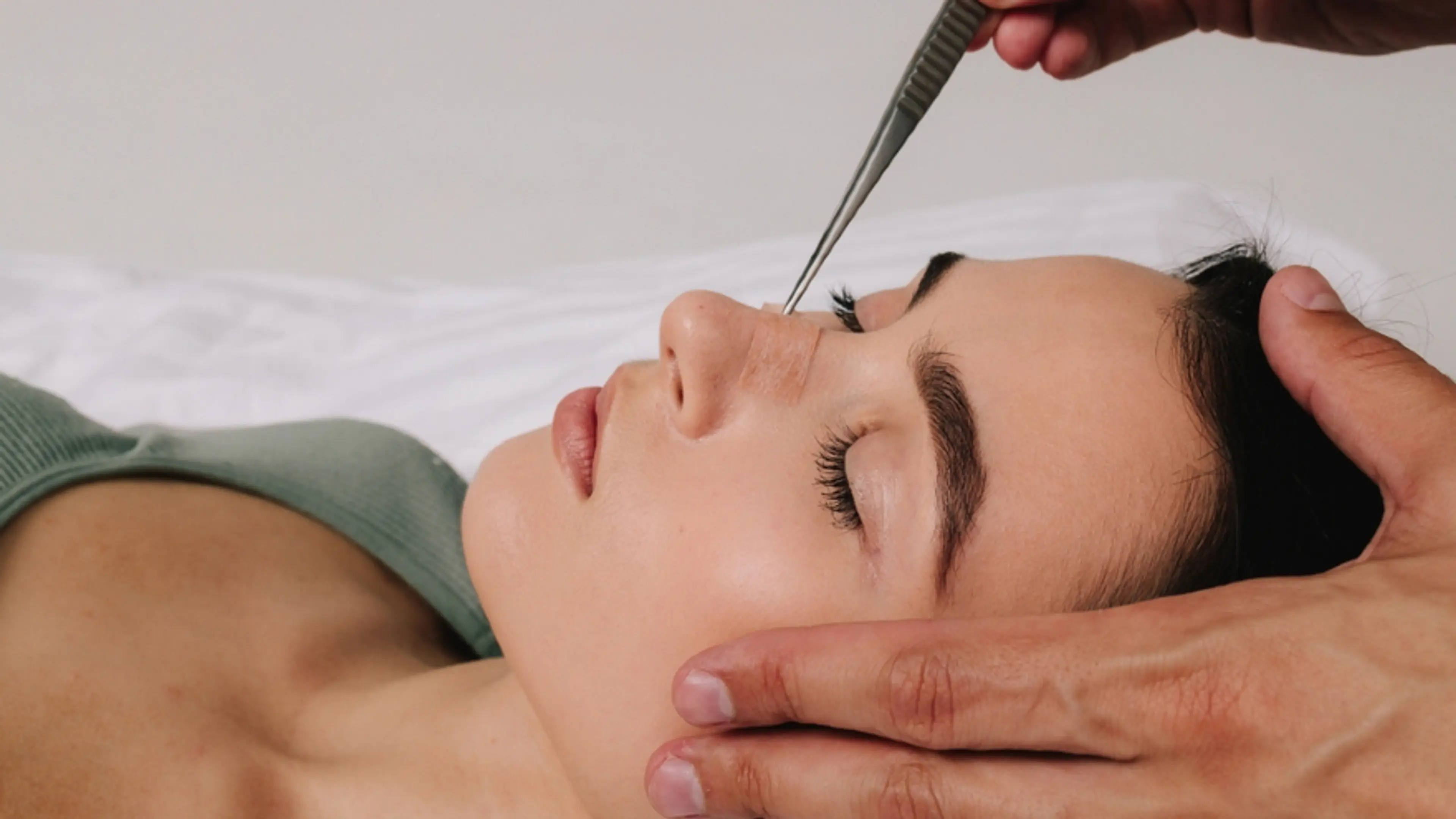
Let’s say you’ve decided on a revision rhinoplasty — maybe your first surgery didn’t go as planned, or you’re dealing with implant-related complications. Your new surgeon recommends using autologous cartilage (your own tissue) instead of synthetic materials.
And then comes the question:
“Where will the cartilage come from?”
This is where cartilage harvesting enters the picture — a vital but often misunderstood step in advanced rhinoplasty, especially in Korea’s world-leading practices like ours at Kowon Plastic Surgery.
In this article, we’ll walk you through what cartilage harvesting involves, why it’s done, and what you can realistically expect during and after the procedure.
Why Cartilage Matters More Than You Think
why-cartilage-matters-more-than-you-thinkThe nose isn’t just skin and bone. Its shape and support rely heavily on cartilage — flexible yet strong tissue that defines the nasal tip, nostril shape, and structural integrity of the bridge.
In primary rhinoplasty, surgeons often reshape or reposition the existing cartilage. But in revision cases, or when building a new nose without implants, additional cartilage is needed to reinforce or reconstruct what was previously damaged, resorbed, or removed.
That’s where cartilage harvesting comes in.
Instead of relying on synthetic implants — which can lead to long-term complications like extrusion, infection, or an “unnatural” look — we use the patient’s own tissue for a safer, more harmonious result.
Common Cartilage Sources: Not All Are Created Equal
common-cartilage-sources:-not-all-are-created-equalThere are three main places we can harvest cartilage:
1. Septal Cartilage (from inside the nose)
1.-septal-cartilage-(from-inside-the-nose)When it’s used: Often in first-time surgeries
Benefits: Easy to access, minimal scarring
Limitations: May be depleted in revision cases or too weak for larger grafts
2. Ear Cartilage (typically from the conchal bowl)
2.-ear-cartilage-(typically-from-the-conchal-bowl)When it’s used: For subtle tip refinement or minor corrections
Benefits: Natural curvature works well for nasal tip support
Limitations: Soft and elastic — not ideal for major reconstruction
3. Rib Cartilage (autologous costal cartilage)
3.-rib-cartilage-(autologous-costal-cartilage)When it’s used: In complex or implant-free rhinoplasty, especially revisions
Benefits: Abundant, strong, can be carved into precise shapes
Limitations: Requires general anesthesia and meticulous technique to avoid warping
At Kowon Plastic Surgery, rib cartilage is our gold standard for high-safety, implant-free rhinoplasty. Under the direction of Dr. Kim Hyung Taek — a leader in rib cartilage reconstruction — we use techniques that minimize visible scarring, prevent warping, and preserve the chest’s function and appearance.
What Actually Happens During Cartilage Harvesting?
what-actually-happens-during-cartilage-harvesting
Let’s break it down based on the cartilage source.
If You’re Getting Rib Cartilage Harvesting
if-you're-getting-rib-cartilage-harvestingStep 1: Anesthesia and Preparation
The procedure is done under general anesthesia for your comfort.
A small incision (usually 2–3 cm) is made along the chest wall, often hidden under the breast fold or in the rib crease.
Step 2: Cartilage Extraction
A portion of the rib cartilage (usually the 6th, 7th, or 8th rib) is carefully carved out.
At Kowon, we use a layer-preserving technique, meaning only a part of the rib is taken, keeping the surrounding structures intact.
Step 3: Sculpting the Graft
The harvested cartilage is then meticulously shaped under direct vision — like sculpting architectural beams for a custom-designed building.
Dr. Kim avoids over-harvesting or rough carving, which can lead to warping or absorption later on.
Step 4: Closing the Incision
If You’re Getting Ear Cartilage Harvesting
if-you're-getting-ear-cartilage-harvestingLocal anesthesia is often sufficient.
A small incision is made behind the ear, where the cartilage is gently removed.
The ear’s shape is preserved by leaving key support structures in place.
Stitches are placed behind the ear — no change to your ear’s appearance.
If You’re Getting Septal Cartilage Harvesting
if-you're-getting-septal-cartilage-harvestingUsually done during the main nasal surgery itself.
The surgeon lifts the nasal lining and removes central parts of the septum while keeping support intact.
No external scar, and the nasal function is preserved with skillful technique.
What About Pain, Recovery, and Scarring?
what-about-pain-recovery-and-scarringWe’re often asked: “Will it hurt?”
Here’s the honest answer.
Rib Cartilage Harvesting:
rib-cartilage-harvesting:Pain level: Mild to moderate soreness at the chest site, controllable with oral painkillers.
Recovery: Most patients return to normal activities within 5–7 days.
Scarring: Minimal with proper closure and scar care. At Kowon, we use advanced suture techniques and post-op scar management for the best cosmetic outcome.
Ear Cartilage:
ear-cartilage:Pain level: Mild discomfort behind the ear
Recovery: Quick — often within 3–4 days
Scarring: Virtually invisible as the incision is hidden in the fold
Septal Cartilage:
septal-cartilage:
Dr. Kim’s Philosophy: Why Autologous Cartilage Is Worth It
dr.-kim's-philosophy:-why-autologous-cartilage-is-worth-it“What many don’t realize,” Dr. Kim often says, “is that natural results take careful planning, not shortcuts.”
That’s why we prioritize autologous cartilage, especially in revision or high-risk cases.
Unlike implants — which may initially look good but carry long-term risks — your own cartilage integrates with your body over time. It moves naturally, heals predictably, and doesn’t trigger immune reactions.
With over 10,000 procedures and two decades of refinement, Dr. Kim’s techniques at Kowon ensure that cartilage harvesting is safe, efficient, and tailored to each patient’s anatomy.
Common Concerns — Answered
common-concerns-answered
“Will harvesting rib cartilage deform my chest?”
"will-harvesting-rib-cartilage-deform-my-chest"Not if done properly. At our clinic, only a small segment is removed, and the rib regenerates over time. The incision is well-hidden, and we use layered closure to preserve muscle and fascia integrity.
“Is rib cartilage more likely to warp?”
"is-rib-cartilage-more-likely-to-warp"Yes — if poorly handled. But with proper carving, orientation, and stabilizing grafts, warping is rare. Dr. Kim’s methods minimize this risk through refined techniques developed over years.
“Do I get to choose the cartilage source?”
"do-i-get-to-choose-the-cartilage-source"Absolutely — but we guide you based on what’s safest and most effective. Our goal is to align your aesthetic goals with long-term function and stability.
Final Thoughts: The Hidden Key to Long-Lasting Rhinoplasty
final-thoughts:-the-hidden-key-to-long-lasting-rhinoplastyCartilage harvesting may not be the flashiest part of rhinoplasty, but it’s often the most important.
Whether rebuilding a collapsed bridge or sculpting a more natural-looking nasal tip, the material matters. And your own cartilage — handled with precision — offers a foundation that looks better, lasts longer, and works with your body, not against it.
If you're planning rhinoplasty — especially a revision or hoping to avoid implants altogether — make sure your clinic has deep expertise in cartilage harvesting and reconstruction.
At Kowon Plastic Surgery, we specialize in:
at-kowon-plastic-surgery-we-specialize-in:Implant-free, autologous cartilage-based rhinoplasty
Rib cartilage harvesting with minimal scarring and downtime
Complex revisions requiring structural rebuilding
A personalized, low-volume approach where safety comes first
Considering surgery?
We invite you to schedule a 1:1 consultation to explore what’s possible — safely, naturally, and with expert care.